Despite data being one of marketing’s obsessions, most brands aren’t extracting value from 11 of the most basic data-points available to everyone.
[First published by BBH Labs 04.12.17]
‘How did Facebook, which prides itself on being able to process billions of data-points…somehow not make the connection that electoral ads paid for in roubles were coming from Russia. Those are two data-points. You put billions of data-points together – you can’t put together roubles with a political ad.’
[Sen. Al Franken to Facebook’s General Counsel at the Senate judiciary subcommittee hearing 31.10.17]
The tech giants not spotting Russian involvement in the 2016 US election shows that even for the most advanced, data-driven businesses, the ones involved in the really deep drilling, there’s still a load of important data lying close to the surface, ignored and untapped.
Marketing suffers from a similar problem.
Only a minority of brands make highly creative and highly effective marketing communications. That’s distinctive, well-branded, emotional, fame-driving, maybe even award-winning. That will drive sales today, sales for years in the future, and deliver returns far beyond what the CFO would get if she kept the money in the bank.
And far from needing terabytes of data – the big data that so many marketers now talk such a good game about – it’s perfectly possible to make highly effective communications that do all the above with the help of just a few kilobytes of data.
So here are some of the simplest, most basic, but most fundamental data-points that could transform the effectiveness of any brand’s marketing, if only they were more universally known and used:
1. Start with the number 0 in mind, or start wrong.
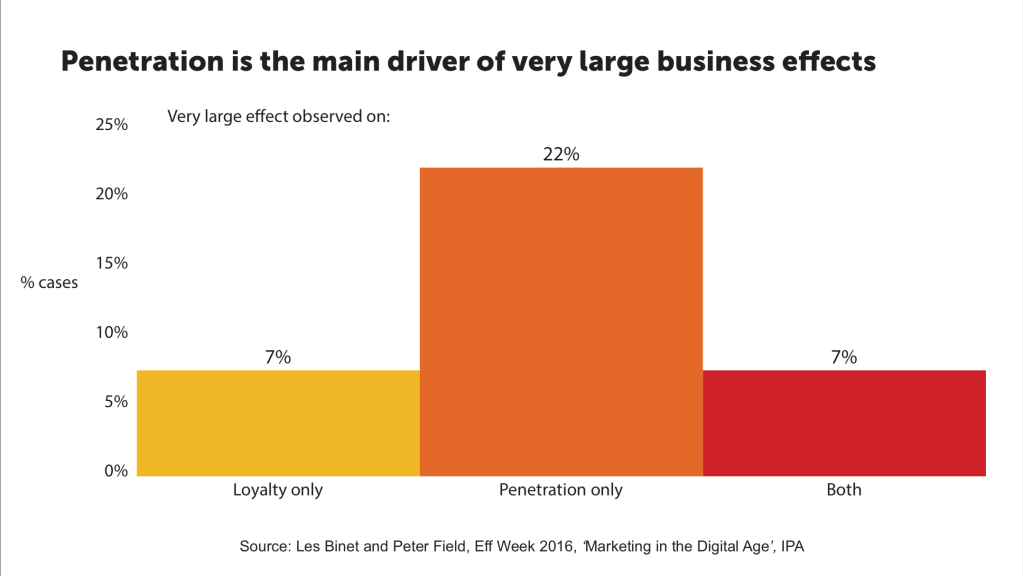
For most brands, the biggest opportunity for growth comes from taking people from buying it zero times to buying it once in a typical purchase cycle[1]. Starting with zero means you’ll start from the right place – a place which assumes most of your customers don’t often buy your brand, don’t think much or care about it and certainly don’t give a s**t about your advertising.
2. Start wrong and you’ll end up making some of the 84% of advertising that doesn’t even get past the first hurdle of being noticed and remembered.
Only 16% of advertising is both recalled and correctly attributed to the brand (according to a study by the Ehrenberg-Bass Institute of 143 TV ads[2]) suggesting 84% of ad spend could be going to waste if that’s replicated in the real world. It’s another sobering reminder that your audience don’t care about your advertising, so you’d better make it distinctive enough to make an impact and well-branded enough so people remember who it’s from.
3. Don’t expect customers to notice you, remember you and remember more than 1 message.
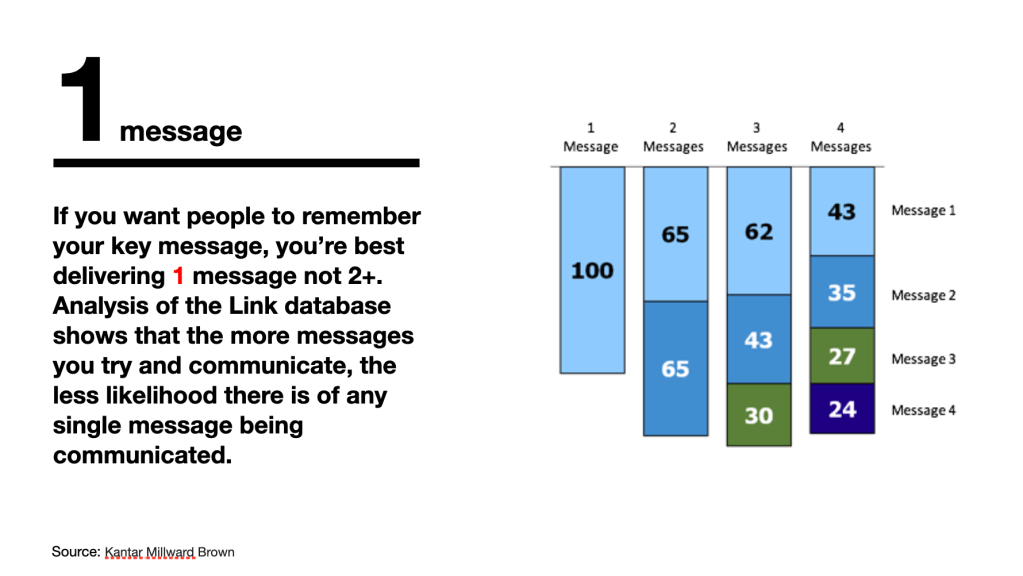
An analysis by Millward Brown of their Link test database[3] provides evidence of something advertising people have always known instinctively: the more messages you try and communicate, the less likelihood there is of any single message being communicated (‘throw people one tennis ball and they’ll catch it, throw them lots and they’ll drop them all’). And remember this is from people who are being forced to watch your ads in pre-testing research: real people in the real world will remember even less.
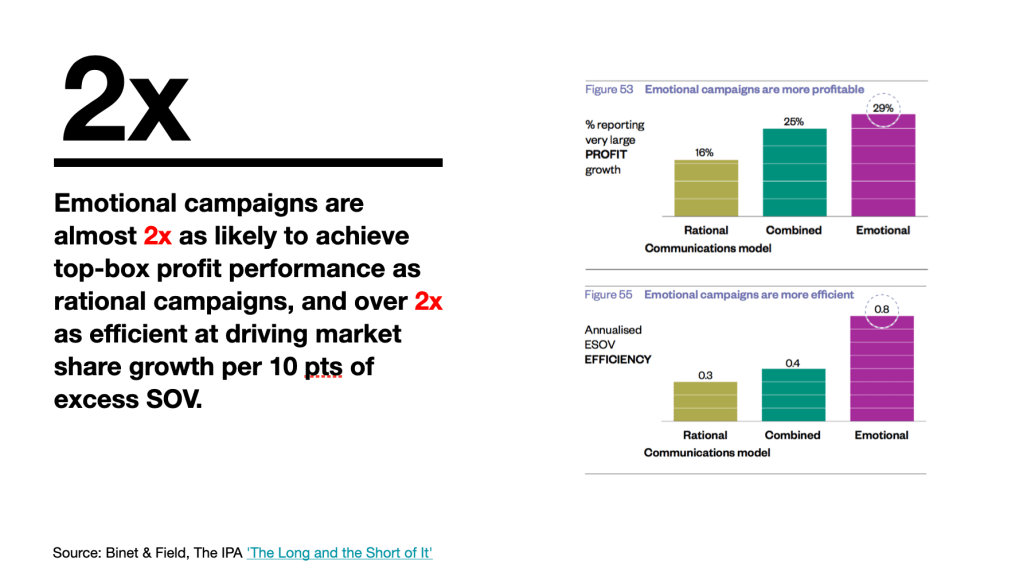
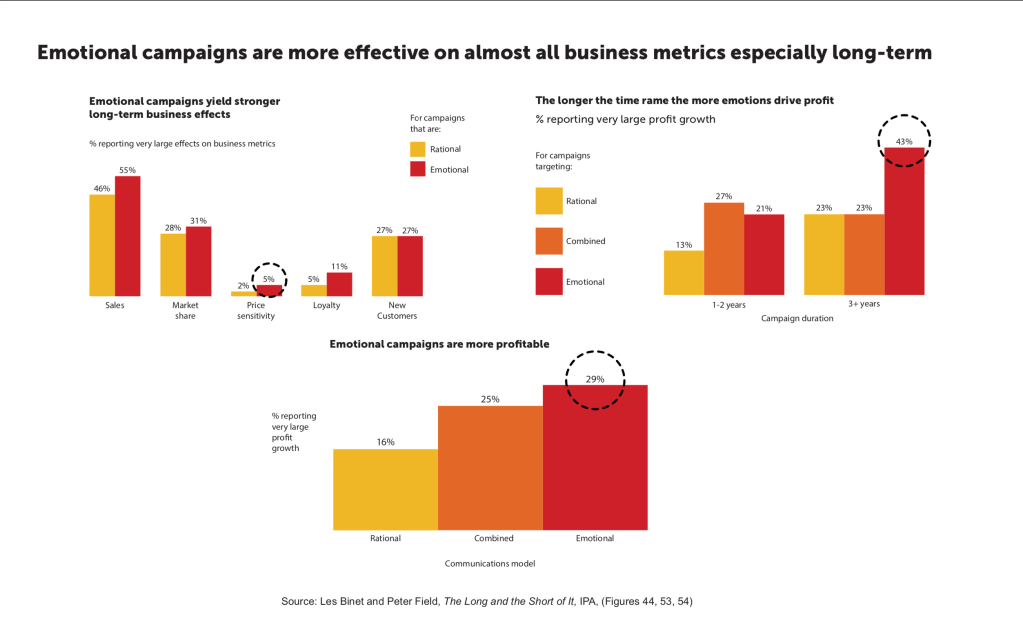
4. Emotional campaigns are 2x as likely to be effective as rational ones in achieving all this.
According to Binet & Field’s work, emotional campaigns are twice as likely to be profitable as rational campaigns, more than twice as efficient at driving market share, and work especially well over the long-term[4].
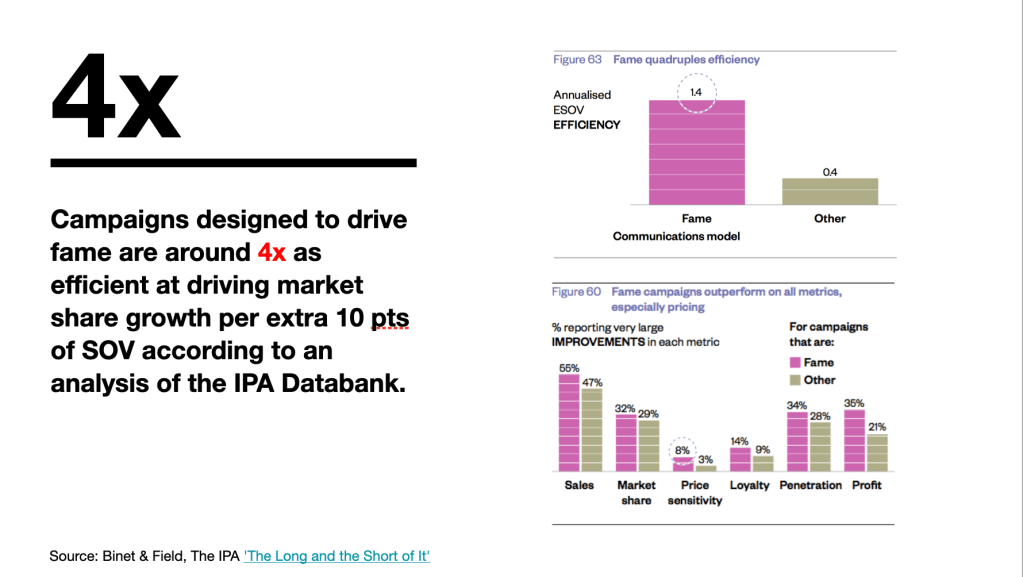
5. Campaigns that aim for fame work 4x harder than the average.
Fame-driving campaigns are 4x as efficient as the average campaign, driving 4x the market share growth per 10 points of extra SOV[5]. Fame is a magic ingredient that can massively enhance the performance of your campaigns.
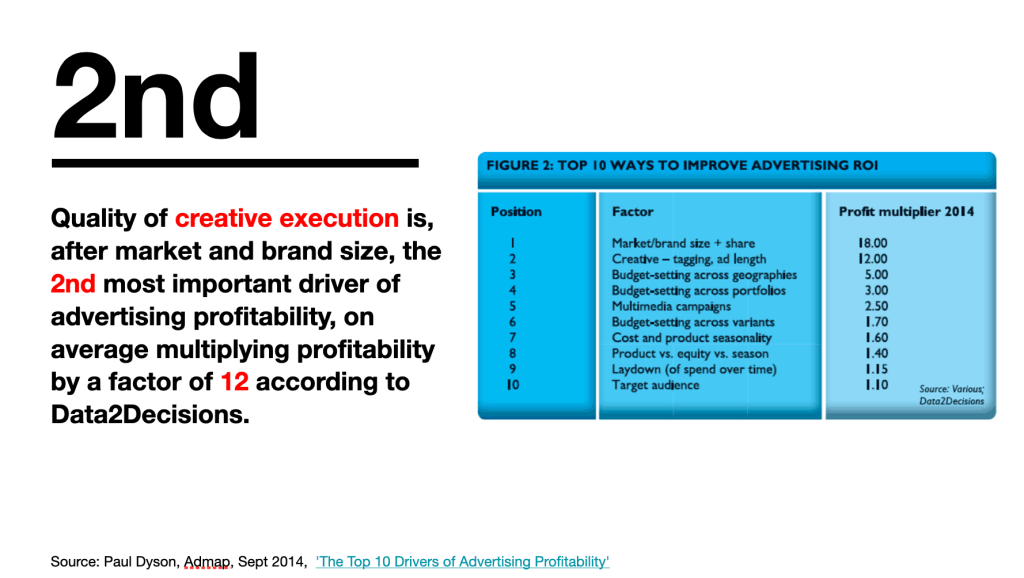
6. Creative execution matters a lot: it’s the 2ndbiggest driver of ROI.
Market and brand size are together the biggest driver of advertising profitability, but the 2nd biggest factor is the quality of creative execution[6]. In fact it can impact ROI by a factor of 12. Creative execution is not ‘colouring in’: it matters more than nearly everything else.
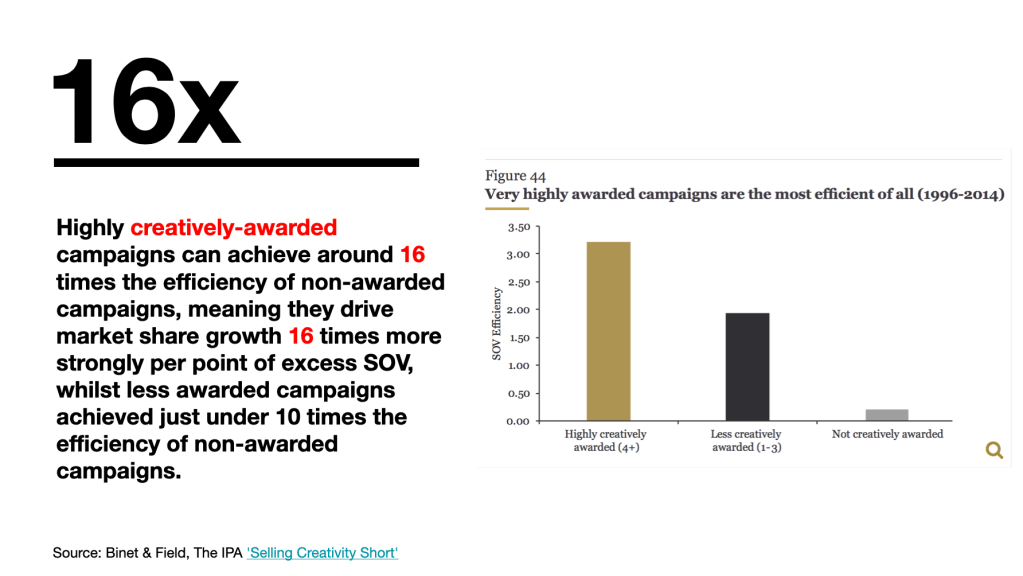
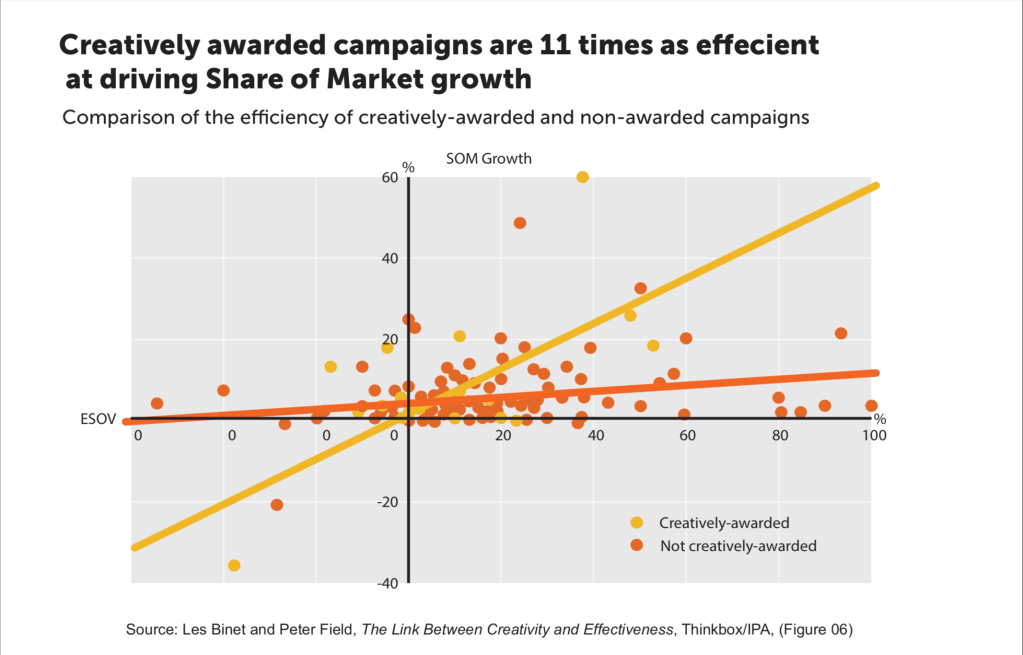
7. Highly creatively-awarded work can be up to 16x as efficient.
Creative awards aren’t important. But Binet & Field’s work suggests that highly-awarded creative work is dramatically more efficient at driving market share growth than non-awarded work[7]. It’s more likely to get talked about, be remembered and most importantly, deliver a much stronger commercial impact.
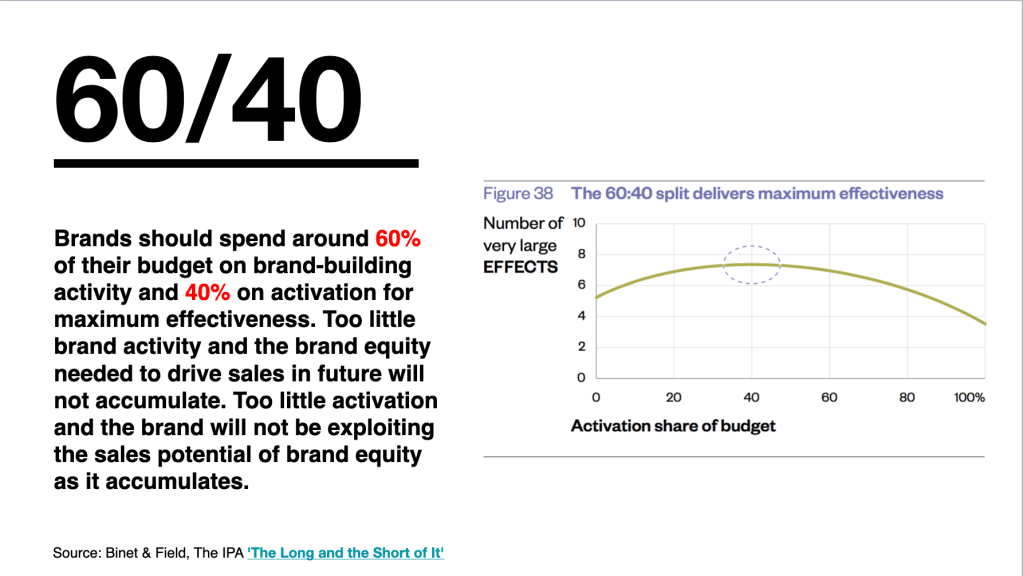
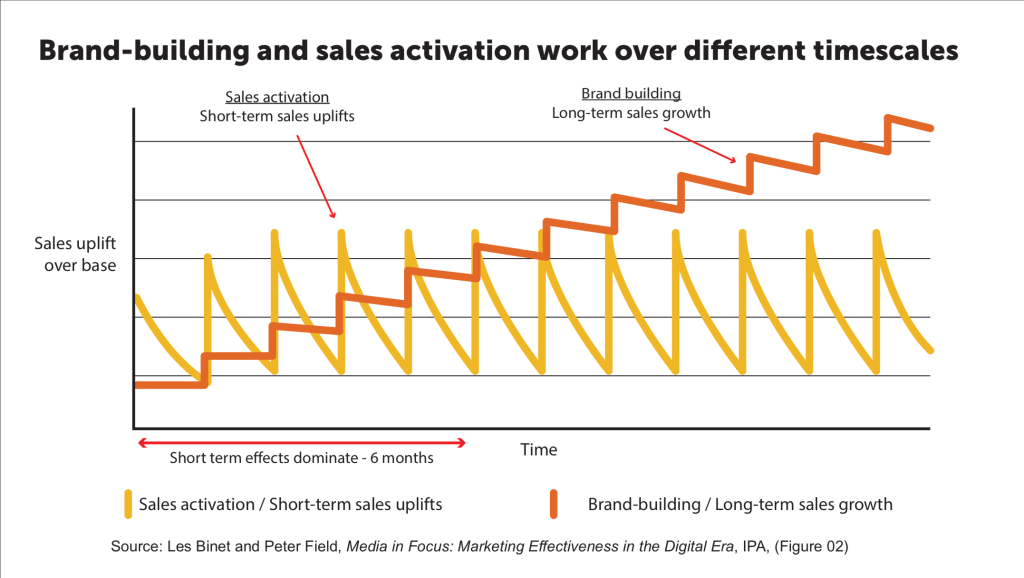
8. For maximum effectiveness you’ll need to find the right balance between brand-building and sales activation, which is on average 60:40[8].
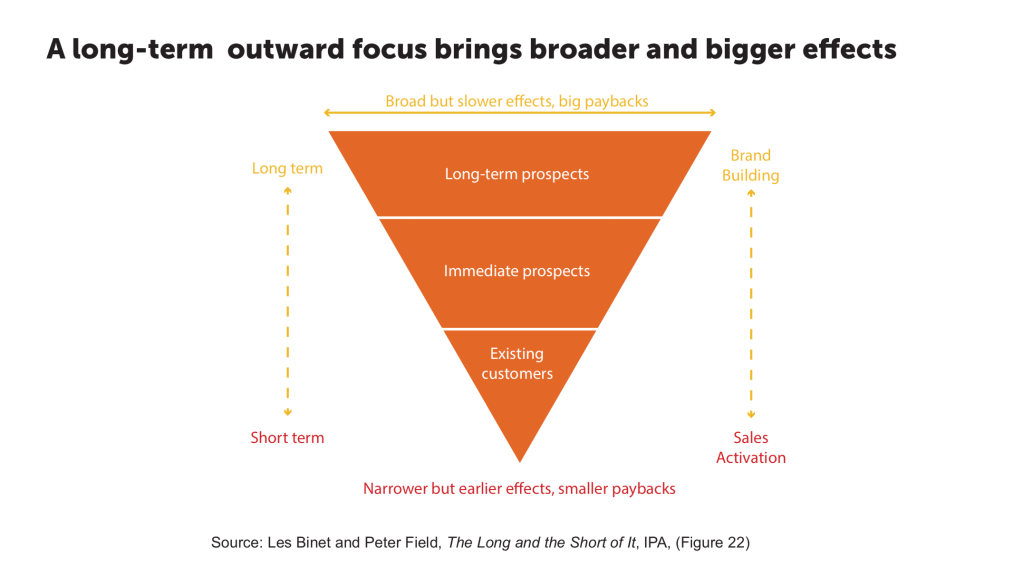
Getting the balance right between long-term brand-building and short-term sales activation, between creating memories and activating them, is important for maximum commercial effectiveness. You’ll have to experiment to work out what’s best for your brand, though.
9. Perhaps the most often ignored data-point is this: 10%pts of excess share of voice drives 0.5% market share on average.
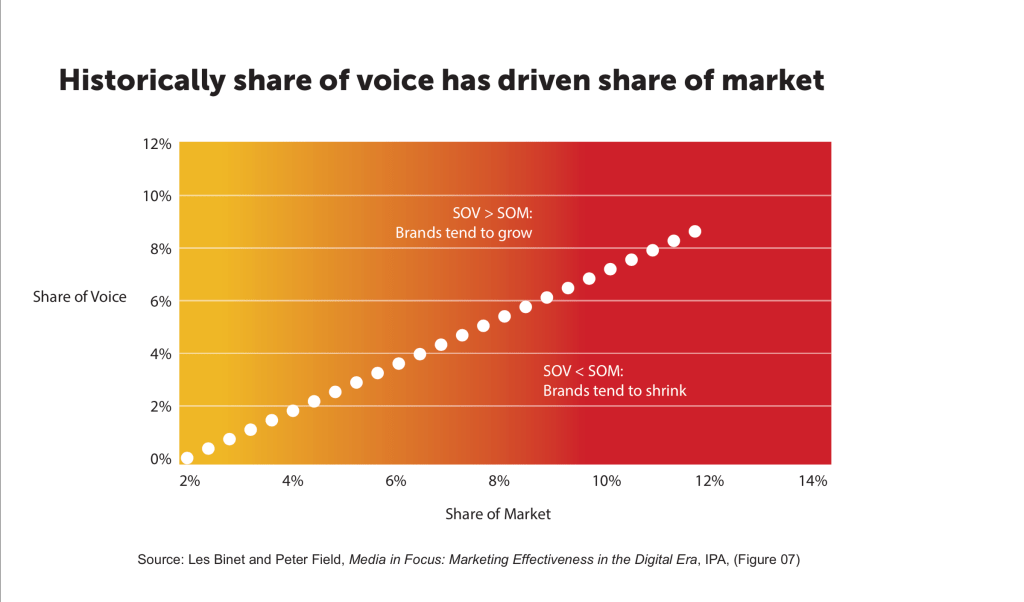
All of this theory has essentially boiled down to an argument for ‘doing bloody good work’ so far. And obviously that’s not enough: if you don’t put decent money behind it, it can’t work. The data supporting this comes from various IPA studies linking share of voice with market share. On average, a 10%pt difference between SOV and SOM leads to 0.5% of extra market share growth[9].
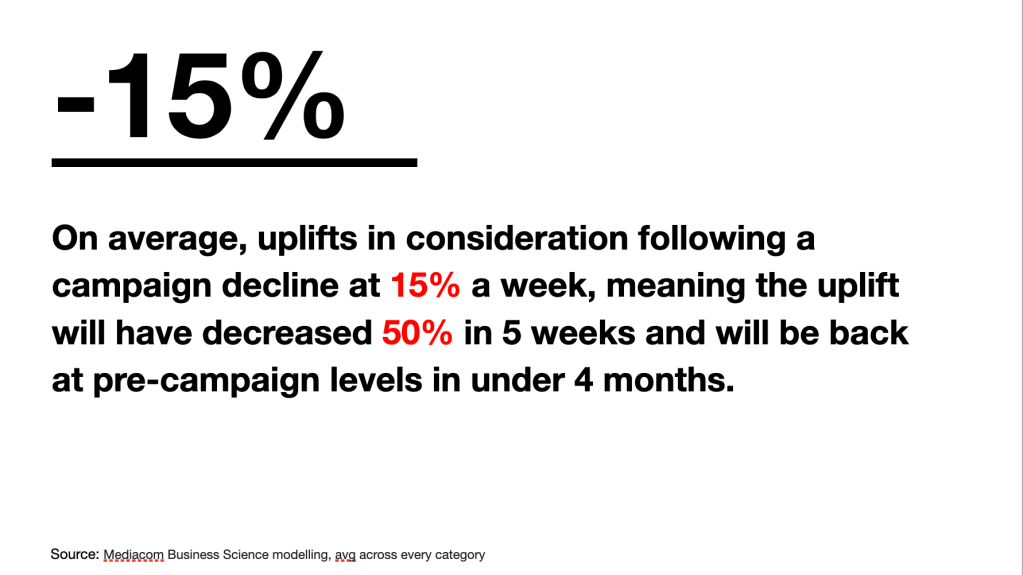
10. Once you’re seeing an impact on brand consideration, you’ve got to keep going as it will drop 15% per week on average following a campaign.
A study by Mediacom business science modelling suggests that on average improvements in consideration will begin to drop at the quite alarming rate of 15% per week, and will be back at pre-campaign levels after 4 months[10]. Don’t be tempted to blow your media budget in ego-boosting bursts: reach your audience as continuously as possible.
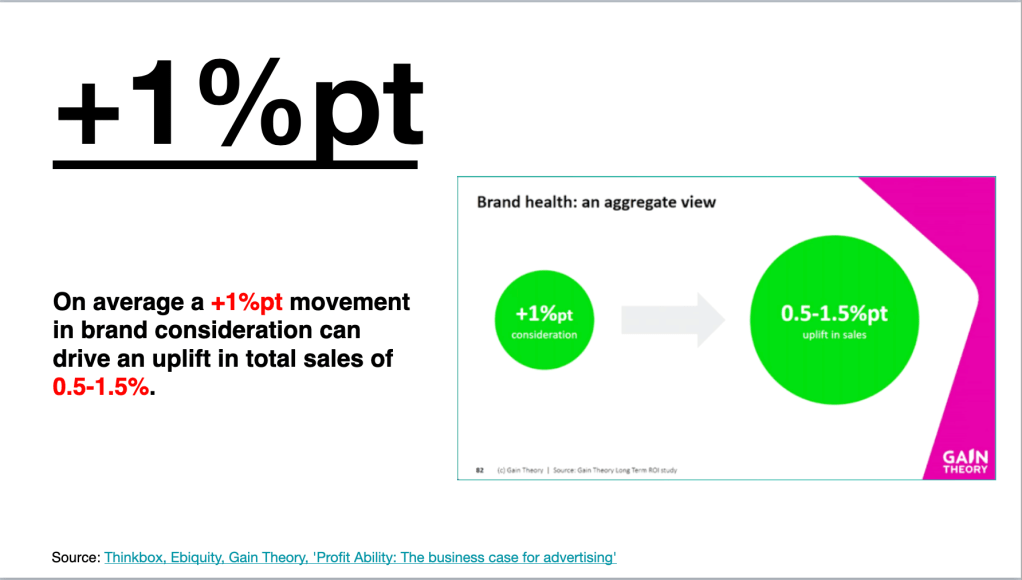
11. The good news is the impact you can see from even tiny shifts in brand consideration can be enormous: a +1%pt shift is worth on average 0.5-1.5% total sales according to Gain Theory’s analysis[11].
These 11 numbers take up just a few kilobytes of data. But employing the principles behind them could help transform the effectiveness of any brand’s advertising.
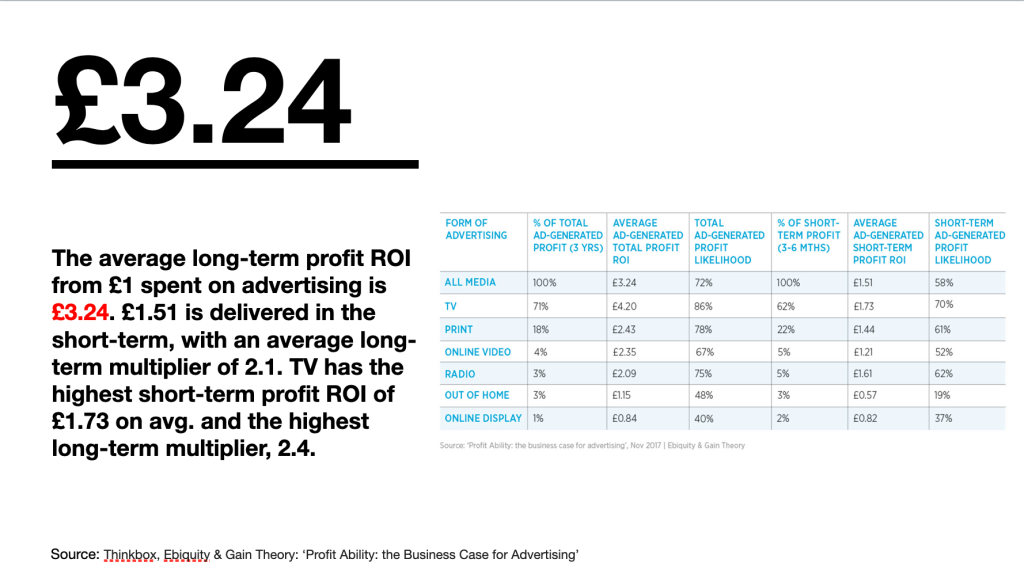
The average UK advertising campaign delivers £1.51 of short-term profit and £3.24 in long-term profit for every £1 spent, according to Thinkbox’s latest study of 1954 campaigns across 150 advertisers[12]. And the strongest short-term profit ROI recorded for a single campaign in this analysis was a massive £12.96.
With potential returns like this on offer, even for merely average marketing, it seems unbelievable that any brand would choose to either not advertise, not spend enough, or to not make good work.
Because making bad work is a choice: a choice that too many marketing teams make all the time by focusing on fashionable marketing buzzwords and ignoring the basics.
The case for the importance of difference & distinctiveness in business, brands and marketing communication. [First published by BBH Labs 20.03.19]
Sameness is commercial suicide – whether your chosen way of being different is differentiation or distinctiveness[1] or like me you’re a cakeist and would ideally want both. Yet there’s a growing ‘sea of sameness’ out there, and the sea levels seem to be rising.
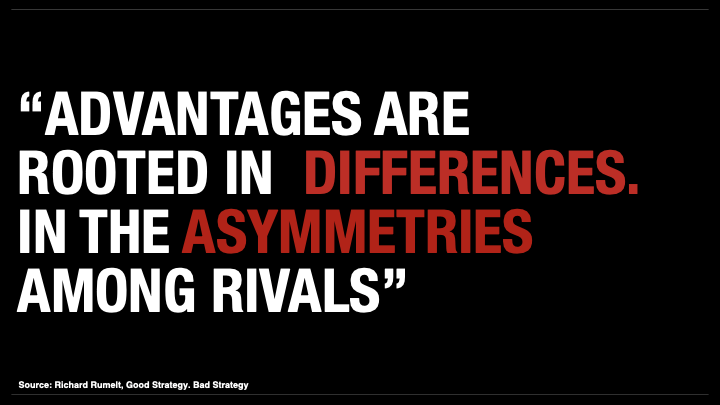
The idea of competitive advantage is intrinsically linked to difference. Which is why the marketing sections of business books always say the same thing – difference matters – and no marketing professors ever advocate sameness as a winning strategy.
This goes back to 1933 when Edward Chamberlin’s seminal book ‘The Theory of Monopolistic Competition’ first introduced the idea of product differentiation, suggesting that real or simply perceived differences, however slight, help pair buyers with sellers according to their preferences. It came to be accepted orthodoxy that emphasising differences between your brand and others could increase people’s appreciation of your offer, make it hard for people to make direct comparisons, make them less sensitive to features of competing offers, and more willing to pay a premium for your brand.
But differentiation has taken a beating in the last decade from Byron Sharp and the Ehrenberg-Bass Institute, who, whilst acknowledging that it exists and matters to a degree, believe its role in consumer choices is less pronounced in practice than the textbooks would have us believe and that brands tend to be much more substitutable than previously thought. They advocate an alternative strategy, ‘distinctiveness’, which is about increasing the visibility of the brand in its competitive environment and making it look more recognisably itself.
Here’s my view, for what it’s worth. The central importance of brand differentiation has probably been over-stated historically, and the importance of distinctiveness had been under-stated until recently. But seeing the two as unrelated, alternative strategies rather than potentially complementary ones means we may be missing out on deploying the full power of difference at a crucial time: a time when both differentiation and distinctiveness have never been less evident in actual marketing practice.
Because on marketing’s frontline, the differentiation vs distinctiveness debate can seem like an irrelevance when brands being different in any way is getting harder and harder to spot in the wild. In fact, if you want to be really critical, sameness, not difference, seems to be becoming the common denominator for many brands today, and whilst this seems true in many categories, it’s especially so in the world of digital service brands.
Although it’s fair to say, this is nothing new – BBH Labs spotted this in 2017 with its discovery of at least 27 brands using the construct ‘Find your X’ in their communications:
The sameness we’re all witnessing is the combined effect of brands being too similar in their offers, poorly differentiated in their branding, and undistinctive in their communication.
Is the value that business, as a whole, places on being different declining? If so there are probably multiple causes rather than a single smoking gun. In this world of agile product development, genuine differences in products can now be eroded faster than ever. Differences tend to be smaller, less tangible and more fleeting. What makes a company different in its totality could be a combination of thousands of tiny differences, rather than larger, more singular, more permanent points of difference. Perhaps these many small differences are harder for marketers to get a fix on, distil and build their brands around. Perhaps in a world where ‘pivoting’ is all the rage, the notion of pinning down what’s enduringly different about a brand and distilling that into consistently distinctive brand assets and communication is falling out of fashion. Perhaps it’s a symptom of the fact that so many marketers now learn on the job in specialist siloes rather than getting formal marketing training where they’d have the big over-arching theories like differentiation and now distinctiveness drummed into them.
Whatever the reasons for the decline in the pursuit of difference, rather than arguing about the relative importance of differentiation vs distinctiveness, let’s aim our fire at an enemy that should unite us all: sameness.
So if you think your brand could be in danger of heading into a sea of sameness, here’s some data that could help:
BEING UNIQUELY DIFFERENT IS MORE PROFITABLE
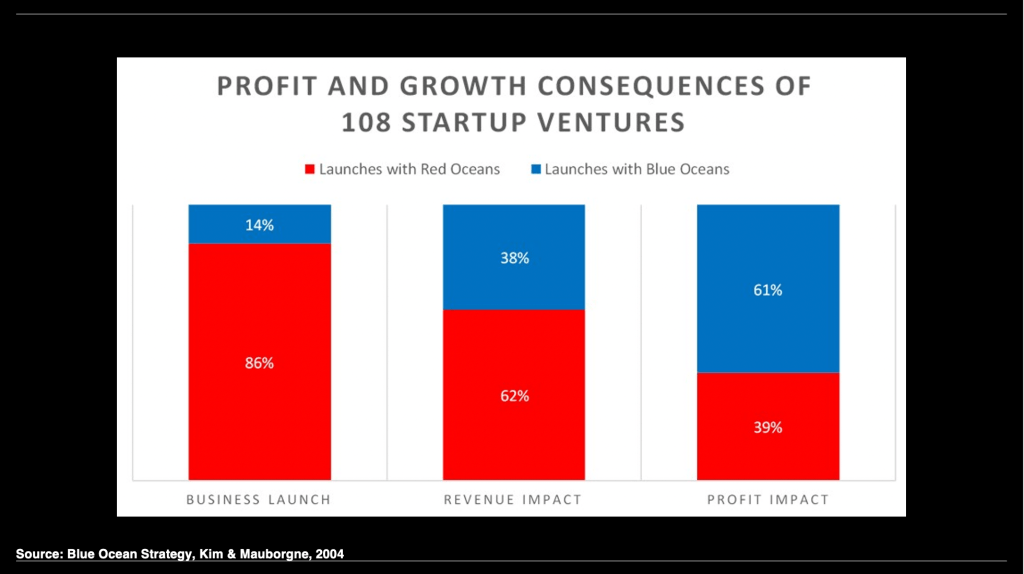
Operating in uncontested market space is far more profitable than competing for a share of an existing market. A study of 108 business launches from 2004[2] showed that the 14% competing in uncontested market space (‘Blue Oceans’), achieved 38% of the total revenue impact and 61% of the total profit impact. Whilst the majority of 86% business launches were competing in existing markets (‘Red Oceans’), only achieved 39% of the total profit impact.
BEING SEEN AS DIFFERENT CAN DRIVE BRAND VALUE
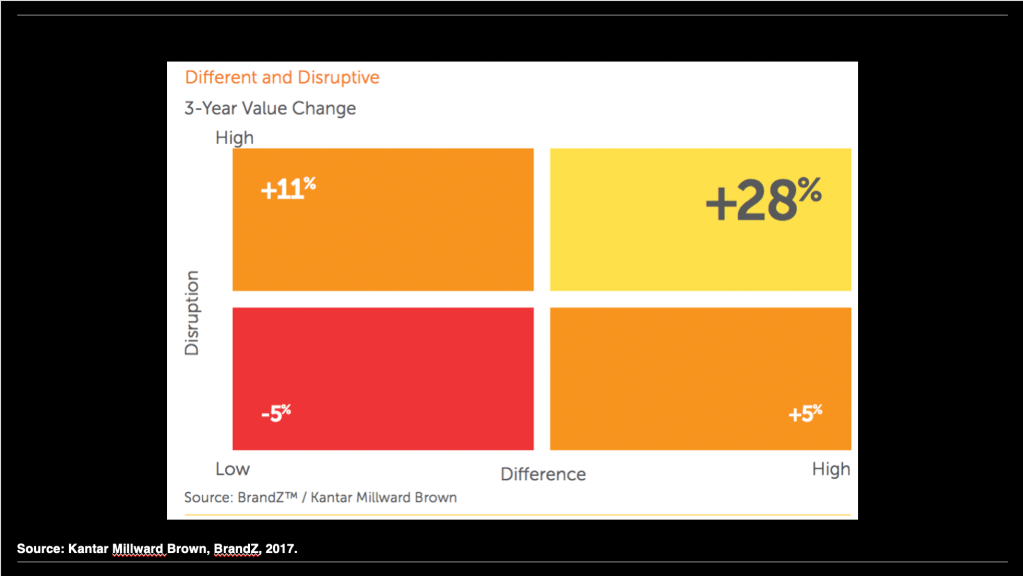
Over a three-year period from 2015-2017 brands that were perceived to be both highly disruptive and different increased in brand value by 28%, whereas brands that were perceived as both low in disruption and differentiation declined by -5%[3].
BEING SEEN AS DIFFERENT CAN PREDICT SALES GROWTH
Brands which people score strongly for both meaning and difference grow sales around 8.2% better in the following year than brands which score poorly, with difference being responsible for at least 50% of the predictive power[4].
PEOPLE WILL PAY A PREMIUM FOR BRANDS THEY THINK ARE DIFFERENT
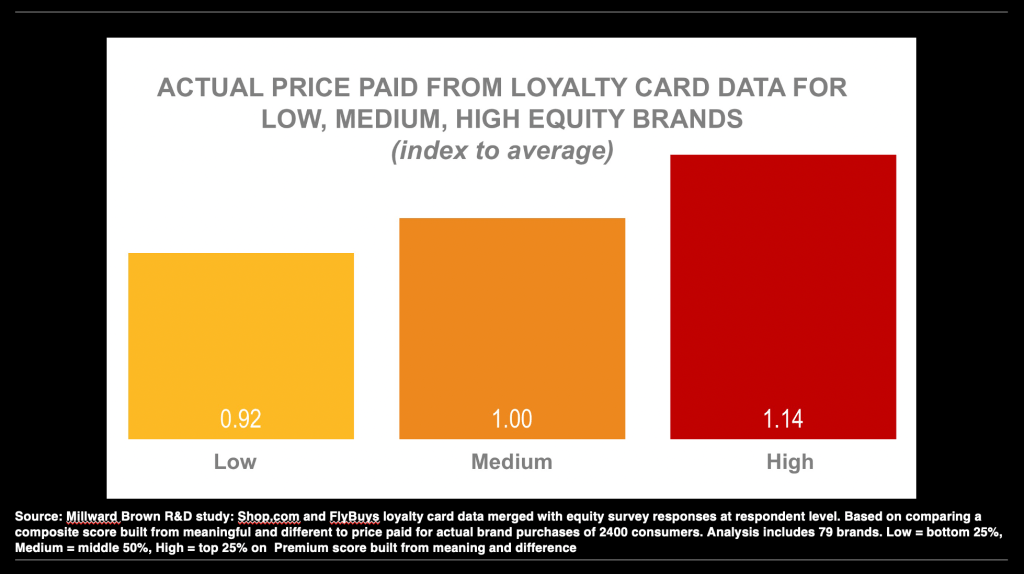
An analysis of actual prices paid (from the loyalty card data of 2400 shoppers for 79 brands) showed that shoppers paid 22% more for brands they find different and meaningful vs those they didn’t, with difference alone accounting for 40% of this on average[5].
ADS THAT MAKE BRANDS SEEM DIFFERENT ARE MORE LIKELY TO DRIVE SALES
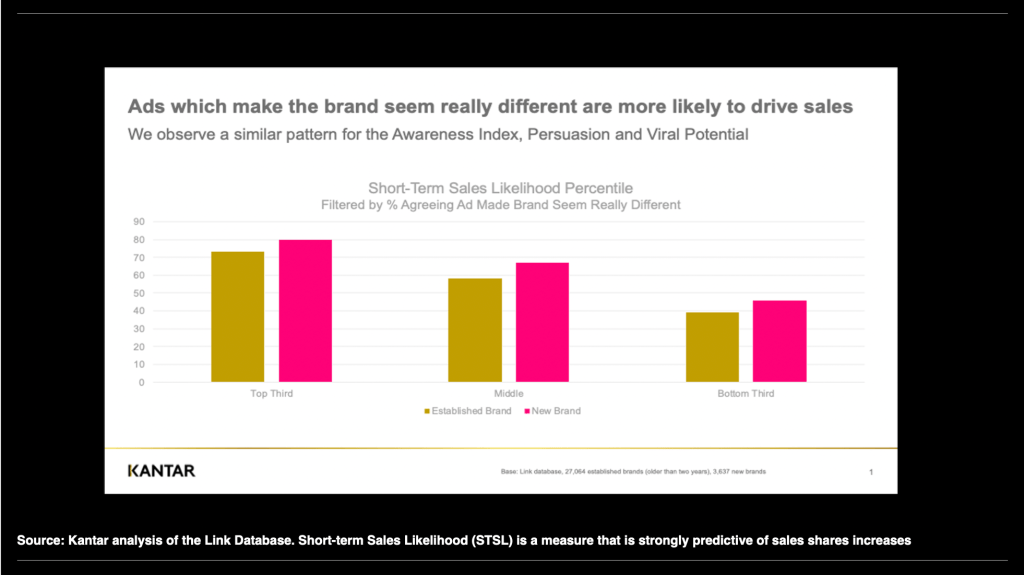
The top 1/3 ads for ‘make the brand seem really different’ in Kantar’s Link database achieve +90% vs the bottom 1/3 on Kantar’s measure of an ad’s likelihood to drive short-term sales[6].
DISTINCTIVENESS IS HIGHLY MEMORABLE
In 1933 psychologist Hedwig von Restorff showed that distinctiveness drives memorability[7], giving her name to the ‘Von Restorff Effect’ (aka the ‘The Distinctiveness Effect’ and the ‘The Isolation Effect‘), which predicts that when multiple similar things are presented, the one that differs from the rest is more likely to be remembered.
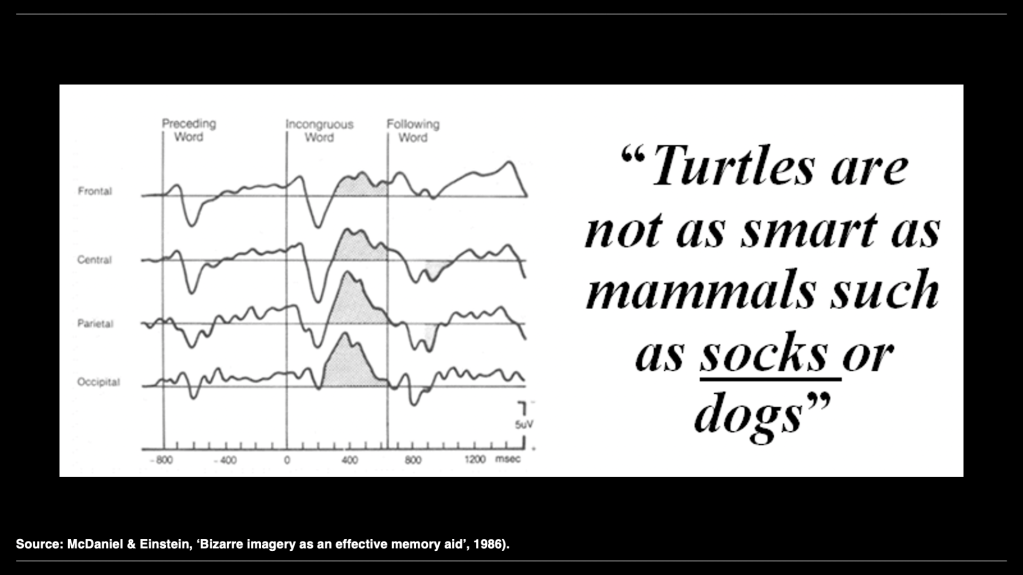
Similarly, ‘The Bizarreness Effect’ predicts that incongruent or surprising things are more memorable than expected and common ones as they’re more distinctive. Researchers from the University of California[8] measured the brain activity of respondents, who whilst wearing EEG caps, read a series of sentences of which some contained semantically incongruous words like “Turtles are not as smart as mammals like socks or dogs.” The data showed a large spike in brain activity when participants read the incongruous word in the sentence, suggesting these words resulted in a significant degree of involuntary attention and processing.
DISTINCTIVE, HIGHLY CREATIVE ADVERTISING SLOGANS ARE MORE MEMORABLE
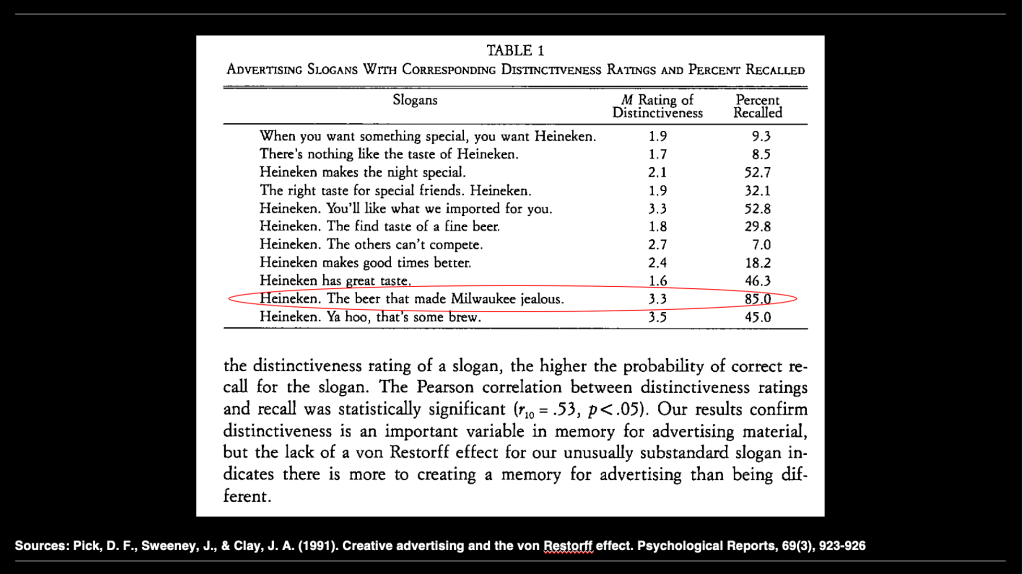
Research into the von Restorff effect in creative advertising found that highly distinctive ad slogans are much more likely to be recalled, but only if they’re judged to be high quality and not if they’re substandard. The slogan ‘The beer that made Milwaukee jealous’ was remembered by 85% in the study but the marginally more distinctive but substandard slogan, ‘Ya hoo, that’s some brew’, was only remembered by 45%.[9]
DISTINCTIVE BRAND ASSETS DRIVE AD RECOGNITION
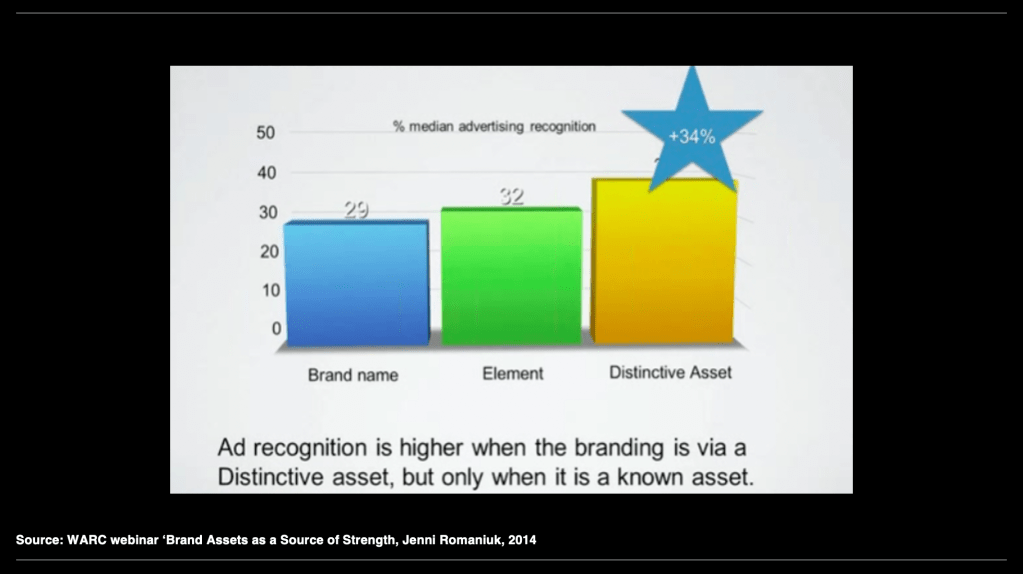
Advertising featuring known distinctive brand assets achieved an average +34% higher advertising recognition in a study by Jenni Romaniuk at the Ehrenberg-Bass Institute[10].
9. DISTINCTIVE BRAND CAMPAIGNS ARE MORE PROFITABLE
‘Distinctive brand campaigns’ featuring recognisable brand ideas & assets achieved a +62% stronger short-term profit ROI vs campaigns which didn’t in an analysis of 1300 campaigns by Ebiquity[11].
DISTINCTIVE ADS CORRELATE WITH SALES GROWTH
Audi’s measure of the distinctiveness of their advertising correlates with increased media-driven sales (relative to total volume sales) between 2015-2017[12]. Audi has also found that when an ad has strong cut-through, it is three times more efficient at driving orders.
More research may be needed on the relative importance of differentiation and distinctiveness before the academic debate can move on, but hopefully this data will help more marketers on the frontline fight the onslaught of sameness wherever they see it.
And perhaps one day differentiation and distinctiveness may be seen as two useful and complimentary tools in the marketing armoury rather than entirely opposing schools of thought.
Clearly there’s no point magicking up distinctive brand assets or distinctive advertising from nowhere. So identify your strengths and differences and build your brand around them. Use them to inform the development of distinctive brand assets and truly distinctive communication. Deploy them consistently. So that everything you do and say makes you look more like you and less like others.
Being different from others and looking recognisably like you works.
Difference is playing it safe, sameness isn’t. Sameness is playing it stupid.
I compiled the most important and useful charts in the work of advertising’s ‘Godfathers of Effectiveness’, Les Binet & Peter Field, in this piece, first published by the IPA in 2018.
No two individuals in the history of advertising have done as much to uncover its overall commercial impact as Les Binet & Peter Field.
For people who care about advertising effectiveness, doing our jobs without their work is inconceivable. They have provided so much evidence of so many fundamentals: the strong relationship between share of voice and share of market, the causal link between levels of creativity and advertising’s effectiveness, the need to balance long-term brand-building with short-term sales activation, the exceptional commercial impact of emotional and fame-driving communications, to name just a few.
But if I had one wish, it would be that their work was even more famous, could make even more of a difference to even more marketers and their brands, especially to people who are specialists in performance marketing and social channels, who may not have been brought up on their work.
Which is why I wanted to select my own ‘Greatest hits’ from their huge back catalogue. These are the charts that have proved most popular with strategists, and most enduring and useful in persuading CMOs, CEOs and wider stakeholders of the commercial value of brand-building communications. Here they are:
Me pidieron recientemente dar una charla respondiendo a la pregunta “¿el propósito de la marca realmente genera ganancias?”. Mi respuesta muy breve fue “sí, puede, pero probablemente no”.
Y la respuesta un poco más larga fue “realmente depende, pero en general el brand purpose se usa en exceso en el marketing y su poder se sobrevalora, y en realidad es mejor usarlo como una herramienta de negocios para compañías que están genuinamente comprometidas con el capitalismo consciente, en lugar de ser un complemento de los equipos de marketing que buscan una solución rápida de ventas”.
Sospecho que ningún análisis de datos robusto demostrará de manera concluyente que es mejor que las marcas tengan un “propósito” a no tenerlo. Al elegir a mano los case studies, probablemente cualquiera podría hacer cualquier argumento que quisiera a favor o en contra: sea que el propósito puede generar profit o, si selecciona ejemplos de marcas que lo hacen mal, para sugerir que no puede. O si desea desprestigiar por completo todo el concepto de propósito, señalando a las marcas que fingen tener un propósito, o incluso destacando las muchas marcas de gran éxito sin propósito.
Resulta bastante fácil elegir a mano ejemplos para hacer cualquier argumento a favor o en contra. De hecho, una de las personas que hizo que el propósito fuera tan popular en los negocios y el marketing fue el ex responsable de marketing global de P&G, Jim Stengel, cuyo libro, ‘Grow’, es esencialmente un gran ejercicio de selección de casos en el que obtuvo las 50 con una marca más fuerte y argumentó que lo que las hace exitosas era que todas tenían una ideal de marca para hacer del mundo un lugar mejor de alguna manera. Recomiendo la consulta del artículo y las charlas de Richard Shotton sobre esto, dado que él destroza los datos del libro de Stengel de una manera a la que yo nunca voy a hacer justicia. Pero es un caso muy convincente.
Elegiré dos cerezas propias, solo para mostrarles que en realidad no soy un escéptico de propósito, solo un escéptico de ciertos tipos de comunicaciones de marca supuestamente “con propósito”. Uno de mis ejemplos favoritos es Timpsons, una cadena de reparación de calzado del Reino Unido, que hace un trabajo increíble empleando a ex prisioneros, y en repetidas ocasiones aparece como una de las 10 mejores compañías en las que trabajar. Ni siquiera usan la palabra ‘propósito’, y nunca los verás produciendo anuncios televisivos en los que se jactan humildemente del bien que hacen, pero según la mayoría de las definiciones parecen tener una marca con bastante propósito. Un ejemplo cercano a mí es Barclays, que ha estado en un viaje de transformación interna desde el escándalo de Libor, que les ha ayudado a descubrir por sí mismos un papel más positivo en la sociedad a través de iniciativas fantásticas como Digital Eagles y LifeSkills. Barclays vio un retorno de la inversión de su publicidad sobre estas iniciativas sociales mucho más fuerte que el ROI para los anuncios que hablan de cuentas corrientes e hipotecas. Es una especie de alquimia de marketing que la publicidad “dirigida por el propósito” de Barclays acerca de ayudar a los jóvenes con técnicas de entrevistas de trabajo vendiese hipotecas por valor de cientos de millones de libras. Eso es claramente un win-win. Pero por cada Barclays, hay un puñado de otras marcas con campañas publicitarias con un pseudo propósito que claramente son solo intentos cínicos de abordar un problema social para captar algunos titulares y darle la vuelta a sus pobres resultados comerciales.
En definitiva, creo que probablemente hay 3 grandes tipos de marcas que se definen a sí mismas como “marcas con propósito” y que vemos en el mundo del marketing. Imagine tres círculos concéntricos que contienen estos tres tipos. En el centro de la diana vemos marcas que nacen con propósito (Born Purposeful), a menudo dirigidas por sus fundadores, a menudo pequeñas, nicho, generalmente fundadas con un propósito social y donde el propósito abarca toda la operación comercial. Toms y Patagonia son quizás los ejemplos más citados de esto. Nadie parece discutir sobre marcas como éstas: propósitos muy claros y modelos comerciales diseñados para equilibrar el propósito y las ganancias. En el siguiente círculo concéntrico vemos un segundo tipo, que tiende a ser conversos corporativos (Corporate Converts), a menudo empresas más grandes que han adoptado el concepto de propósito más recientemente. Por lo general, parecen realmente querer marcar un cambio positivo para el mundo a la vez que ganan dinero, a veces para corregir errores del pasado o simplemente para convertirse en un mejor ciudadano responsable. Están, por definición, en un viaje de transformación y, a menudo, son empresas más complejas, y por eso pueden tener que tomar decisiones pragmáticas que favorecen el beneficio sobre el propósito en ciertos casos. Es posible que no tengan un modelo de negocio construido alrededor de su propósito. Es posible que tengan ciertas voces internas que estén más comprometidas con su propósito que otras, y es probable que no tengan un fundador presente que se comprometa a mantener el negocio permanentemente en línea con su propósito en toda su toma de decisiones.Son, por su naturaleza, un área más gris. El propósito a menudo se convierte en un nuevo tipo de visión comercial o estrella polar para este tipo de marcas: por lo general, deberán encontrar un espacio en la parte superior de su pirámide de estrategia para su nuevo propósito.
Y hay un tercer tipo, en el círculo exterior, al que llamaría marcas con pseudo propósito (Pseudo-purposeful): estas son para las cuales el propósito solo se trata de una nueva campaña publicitaria que pretende tratar de resolver un problema como la igualdad de género o racial, o la masculinidad tóxica o cualquiera que sea el tema más resonante que sus datos de escucha social dicen que es tendencia en su target ese mes. Este es el tipo de propósito que es menos probable que se incruste en todas las funciones de una empresa, probablemente se desarrolló en el departamento de marketing y, por lo tanto, es mucho menos probable que se arraigue dentro de toda una organización, se tome en serio y crezca a lo largo del tiempo. Por lo tanto, es mucho menos probable que sea rentable a largo plazo.
Por lo tanto, probablemente hay tres tipos de marcas con propósito: 1. Marcas que nacen con propósito , 2. Los conversos corporativos , 3. Las marcas con pseudo propósito que hacen lo que recientemente se ha etiquetado como “publicidad consciente” (woke, en el original). Y la probabilidad de que el propósito genere ganancias probablemente sea decreciente del tipo 1 al 3.
Y si bien es bastante obvio que, como la mayoría de las cosas, el propósito de la marca se encuentra en ese espectro, los debates sobre el propósito en el marketing siempre parecen estar enormemente divididos, con las bestias más grandes de la industria cayendo firmemente de un lado u otro. Keith Weed de Unilever y Dave Lewis de Tesco son creyentes. Pero dos de los profesores más conocidos del marketing, Byron Sharp y Mark Ritson, son no creyentes, y tienden a ver la obsesión del marketing con propósito como una señal de que los vendedores han perdido la confianza y el orgullo en su tarea principal: vender.
La visión más simple y de sentido común es ésta, expresada por Jenni Romaniuk del Instituto Ehrenberg-Bass, quien cuando se le preguntó sobre el propósito de la marca dijo simplemente: “El propósito de una marca es vender cosas”.
Mark Ritson, dice esto: “El propósito de la marca es principalmente una conversación sin sentido. Hay un par de marcas, como Ben y Jerry’s … que fueron inicialmente fundadas con un propósito. Pero para la mayoría de las marcas, los bancos y las compañías de telecomunicaciones, estos nobles propósitos suenan igual: no están diferenciados, a los clientes no les importan una mierda”. Ritson tiende a ver el Propósito, con algunas excepciones específicas, como una mala práctica de marketing, que probablemente no conduzca a la diferenciación de la marca y carezca de relevancia para la mayoría de los consumidores. Él ve que el marketing con propósito no ayuda a las marcas a crear una diferenciación relevante, no ayuda a que las marcas se destaquen de la multitud de una manera que motive a los consumidores. También ataca el propósito como una capa de bullshit para crear confusión en los ojos de los crédulos consumidores. Al escribir sobre Starbucks, dijo esto: “Una y otra vez nos encontramos con el brillo admirable y elevado del propósito de la marca solo para descubrir que se desvanece incluso con el más mínimo rasguño para revelar una sub-superficie más oscura y comercial debajo. La famosa ‘misión’ de Starbucks para inspirar y nutrir el espíritu humano: una persona, una taza y un vecindario a la vez ‘es lo más idealista posible. Pero contradice poderosamente la abyecta incapacidad de la empresa para alinear sus responsabilidades fiscales en consecuencia ”.
Byron Sharp no solo ve engaño y doble moral en la obsesión del marketing con el Propósito, sino que también descubre algo un poco más profundo: un nivel de autoengaño, incluso de autodesprecio entre los marketers. Él dice: “[El propósito de la marca] es casi como una disculpa, ya que sentimos que el marketing es tan irrespetuoso y malvado que tenemos que hacer estas otras cosas. Creo que eso es terrible. Si los especialistas en marketing no defienden el marketing, ¿quién lo hará?”
Muy pocas personas en marketing parecen estar en desacuerdo con la importancia del propósito de la marca cuando los ejemplos citados son empresas basadas en modelos comerciales progresivos que comparten con éxito los ingresos del crecimiento para ayudar a aliviar un problema social. Pero cuando la publicidad se convierte en una parte importante de la conversación sobre el propósito, las cosas tienden a salir mal. De hecho, mi opinión es que si tener un propósito significa hacer anuncios para contárselo a la gente, entonces probablemente lo esté haciendo mal.
Ese es mi punto de vista. ¿Pero cómo llegamos aquí? ¿Cómo llegamos a un lugar donde el propósito de la marca se convirtió simultáneamente en el concepto de marketing más penetrante y a la vez más divisivo? ¿Cómo podemos explicar el aumento y la dominación del propósito de la marca en el marketing de principios del siglo XXI?
Mi respuesta a esa última pregunta es la siguiente.
El dominio del propósito de la marca en el marketing es quizás la consecuencia inevitable de que la gente lleve 150 años llamando mentirosos a los publicitarios. Que lo que hacen es engañoso, que tiene poco o ningún valor positivo para la sociedad, que no importa. Escuchar constantemente este punto de vista ha ayudado a muchas personas que trabajan en publicidad a tener dudas sobre el papel que desempeñan en la sociedad.
Una encuesta de Ipsos-Mori de 2018 descubrió que los ejecutivos de anuncios son la profesión menos confiable en el Reino Unido, con solo un 18% de los encuestados que dicen que confían en que los publicitarios dicen la verdad. Son menos fiables que los agentes inmobiliarios, periodistas, incluso políticos. Un estudio de larga duración con más de seis décadas de datos sugiere que alrededor del 70% del público tiende a ver la publicidad como falsa, y que este número se ha mantenido más o menos estable durante todo ese tiempo. Esto coincide con un hallazgo de la Asociación de Publicidad que confía en la industria publicitaria en general fue de alrededor del 30% en 2018.
Y mi teoría es que quizás la gente de publicidad ha buscado inconscientemente en respuesta, a través de su ansiosa adopción del concepto de propósito de la marca, demostrar que pueden ser valiosos para la sociedad y que su trabajo puede hacer algo bueno. La gran ironía aquí es que es una respuesta que ha dado con los publicitarios fingiendo, por ejemplo, que una marca de agua con azúcar puede resolver algunos de los problemas más grandes de la sociedad, en realidad tendrá lo contrario de la consecuencia pretendida: la mayoría de los pseudo-propósito la publicidad solo hacen que los publicitarios y sus creaciones parezcan aún más engañosas.
Los publicitarios siempre han tratado de presentarse como ciudadanos corporativos respetables y responsables ante la fuerte sospecha de que no lo son. Solo tiene que mirar los nombres de las agencias DDB, BBDO, WPP, Ogilvy & Mather, J Walter Thompson, agencias que intentan presentarse como personas respetables y profesionales, cuyos nombres suenan como despachos de abogados o contables. El truco de David Ogilvy fue presentarse como el aristócrata refinado de la publicidad entre los tiburones y los vendedores ambulantes de Nueva York. A pesar o incluso a causa de su nombre jurídico, la agencia de Nueva York BBDO, fue apodada, por nada menos que el presidente Harry S. Truman, como ‘ Bunco, Bull, Deceipt y Ofuscation’. Bill Bernbach construyó la reputación de su agencia DDB con la idea de que estaba vendiendo “la verdad envuelta en ingenio”, con el fin de destacarse contra el engañoso vendedor clásico de la época, con anuncios que a su vez contaban versiones extremas de la verdad como “Lemon” para el VW Beetle.
‘The Adman’s Dilemma – from Barnum to Trump’ es un libro fascinante del historiador cultural Paul Rutherford, que para mí explica de alguna manera por qué la publicidad siempre ha sido y sigue siendo una de las profesiones menos confiables, y por qué la publicidad es vista por muchos como una especie de engaño con licencia. Es una crónica de la narrativa cultural anti-publicidad que prevalece desde los primeros días de la publicidad en la mitad del siglo XIX de PT Barnum hasta el día de hoy. Rutherford comienza con Barnum, cuya habilidad engañando a un público crédulo lo ayudó a alcanzar una reputación como el rey de la publicidad falsa, ‘el súper-charlatán’.
El libro de Rutherford narra la protesta pública, y la posterior respuesta regulatoria, a la publicidad de los magnates de la medicina patentada en los EE. UU. La medicina patentada más famosa nacida en esta era, por supuesto, es Coca Cola, que se lanzó en 1886.
El libro continúa discutiendo cómo los años 50 y 60 vieron uno de los momentos más famosos en el movimiento antipublicidad cuando una serie de best-sellers que incluyó ‘The Hidden Persuaders’ del periodista Vance Packard causó pánico moral sobre las técnicas psicológicas nefastas y engañosas supuestamente utilizadas por los entonces recientes anunciantes de televisión. Creo que existen paralelos claros entre los miedos de los años 50 y los que tenemos ahora sobre el uso de nuestros datos personales por parte de Facebook, así como el uso del targeting psicométrico para la publicidad política en periodo electoral. Cualquiera que sea el lado en el que estés en el debate sobre Facebook, la demonización de Mark Zuckerberg claramente tiene paralelos con este tropo del publicista como manipulador público y engañador.
Quizás el episodio antipublicidad más relevante para una discusión sobre el propósito de la marca es el éxito de ventas mundial de 1999 de Naomi Klein ‘No Logo’. El libro de Klein fue un ataque descaradamente anticapitalista contra el impacto social negativo de la publicidad, que señalaba la hipocresía de muchas de las marcas globales que se apropiaban de valores sociales y morales al tiempo que se involucraban en prácticas cuestionables de empleo y medioambientales, en un adelanto de la críticas a algunas de las marcas más obvias de pseudo propósito de la actualidad.
Al destacar algunos de los peores comportamientos de las marcas globales, “No Logo” jugó su papel en los esfuerzos posteriores de las grandes empresas para limpiar sus actos y convertirse en buenos ciudadanos corporativos. Lo que a su vez está llevando a muchas empresas a ser más decididas y asumir la filosofía que ahora se llama capitalismo consciente.
Para Rutherford, Don Draper de Mad Men es el sufridor arquetípico del ‘dilema del publicitario, del cual dice ‘cualquier éxito que encontró, encontró su vida vacía, hueca, buscó alguna experiencia más real, más auténtica’, y cita al cuñado de Don Draper diciéndole: “Eres un vagabundo, ¿qué haces, qué creas? Te dedicas a cultivar el bullshit”.
Entonces, dada la forma en que la publicidad siempre se ha retratado en la cultura, no es difícil ver por qué los publicitarios aprovecharían la oportunidad de mostrar que son profesionales respetables cuyo trabajo puede tener un impacto positivo en la sociedad. Pero al elegir saltar de manera tan obvia al carro del propósito de la marca, es posible que sólo empeoremos las cosas.
Cuando lo que realmente necesitamos hacer para demostrar nuestro valor para la sociedad es demostrar nuestro valor comercial en primer lugar, tener orgullo en el valor que creamos y demostrar el papel que desempeñamos en impulsar la economía y, por lo tanto, la sociedad hacia adelante. Hay virtud genuina en eso.
En la escena final del episodio final de Mad Men, vemos a Don Draper meditando sobre un acantilado, y como en un momento de eureka en su estado meditativo, cortamos el famoso anuncio de Coca-Cola de 1971 “I’d like to teach the world to sing”. Es entonces cuando vemos a un genio publicitario ficticio soñando con una verdadera celebración de paz, amor y armonía, una representación idealizada de la cultura hippie y apropiándosela para un anuncio de la marca más famosa y valiosa del mundo. Es una combinación brillante de realidad y ficción, autenticidad y artificio.
Es simplemente el final más perfecto para el espectáculo tener a Don Draper, el publicista arquetípico y autoengañador, mientras él mismo busca una existencia más auténtica y con propósito, soñando con una marca de agua con azúcar, lo que bien pudo haber sido el Paciente Cero de toda la publicidad con pseudo propósito que siguió en las décadas posteriores.
Es difícil imaginar una representación más perfecta de la relación compleja e incómoda de la publicidad con la verdad, la mentira y el propósito de la marca.